
Lincoln County Arrest Records and Charges
Lincoln County arrest records start with the law enforcement event. The sheriff, city police, Kentucky State Police, or another agency may make the arrest or issue the citation. A booking or custody record can show the name used at intake, the charge text supplied to jail staff, bail if listed, and the person's current custody disposition. That record is not the same as the final criminal court file. It is an early record of custody and accusation.
Court charges after arrest begin when the charging paper reaches the court system. In Lincoln County, the Circuit Court Clerk is the custodian for Circuit, Family, and District Court case records. Misdemeanors, traffic offenses, violations, arraignments, and felony probable-cause hearings generally begin in District Court. Felony cases move through Circuit Court after indictment or transfer. The Lincoln County inmate roster may help identify booking charges, but the full outcome, plea, dismissal, sentence, or expungement status belongs in the criminal court record.
The county offices are close together in downtown Stanford, but their records are not interchangeable. The Lincoln County Sheriff's Office handles law-enforcement and warrant service questions. The Circuit Court Clerk handles court files. The County Clerk handles land records, marriage licenses, recorded wills, and local open-records requests for that office only.
The county government page for the Lincoln County Attorney identifies the local prosecutor office in Stanford.
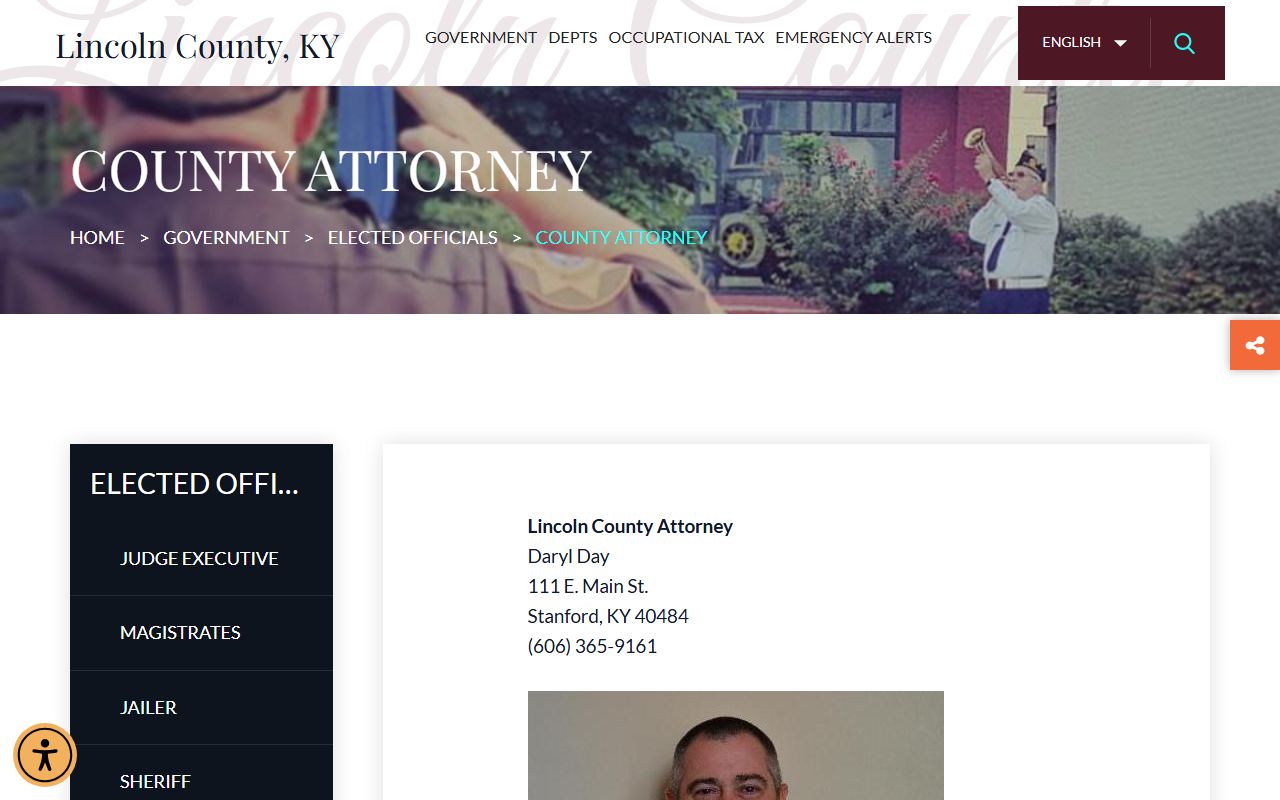
That office detail matters because Kentucky uses County Attorneys and Commonwealth's Attorneys rather than a District Attorney title.
Search Lincoln County Arrest Records
Start with the record type. If the need is custody, bail, or a recent booking listing, use the sheriff roster and the inmate channels. If the need is the filed charge, court date, charge status, or final result, use KYeCourts public case access, the Kentucky Court of Justice docket search, or the Lincoln County Circuit Court Clerk. Public KYeCourts access uses a guest login and captcha gate. The docket search can show court dates, but its own warning says the output is not an official docket and may change.
- Check the official Lincoln County inmate roster if the question is current custody or a booking charge.
- Use KYeCourts guest public case access for public court case information connected to the charge.
- Use the docket search for a future court date by selecting Lincoln County, Circuit or District, and the hearing date.
- Call the Circuit Court Clerk at 606-365-2535 when a certified copy, older file, or exact charge status is needed.
- Use prosecutor or defense counsel channels for legal questions about amendments, reductions, pleas, or dismissal strategy.
A court charge record can lag behind an arrest. A roster may show the charge text used at booking before prosecutor review, while the court file may later show a complaint, citation, information, indictment, amended count, dismissed count, or reduced offense. For the custody side, the Lincoln County jail roster and state custody systems are covered in the Lincoln County inmate records resource.
Lincoln County Court Charges
After arrest, the charge that matters in court is the charge filed in the case. Kentucky criminal matters can begin by citation, complaint, warrant process, information, or indictment depending on the offense level and stage. District Court handles misdemeanors, violations, traffic matters, arraignments, and felony probable-cause hearings. Circuit Court handles felonies, capital offenses, and felony case records after indictment or transfer.
| Charging paper | Who files or issues it | Common Lincoln County use | What to verify |
|---|---|---|---|
| Complaint or citation | Officer or prosecutor | Misdemeanor, violation, traffic, or early criminal process in District Court | Charge text, statute, court date, bond, and case number |
| Information | Prosecutor | Formal accusation where permitted by Kentucky procedure | Whether the charge was amended or resolved by plea |
| Indictment | Grand jury | Felony case path in Circuit Court | Counts, offense level, arraignment, and later disposition |
The statewide court structure page from the Kentucky Court of Justice explains the Circuit Court and District Court split. That split is central in Lincoln County because the same arrest can create a District Court appearance first and then a Circuit Court felony file later.
Lincoln County Charge Status
Charge status can change. A booking list may show one charge label, a complaint may use a different label, and a final judgment may show a different offense if the charge was amended, reduced, dismissed, or resolved by plea. A single arrest can also produce several separate counts. Each count should be read on its own.
| Status | What it means in a charge record |
|---|---|
| Pending | The charge is still open or awaiting a later court event, plea, hearing, or disposition. |
| Amended or reduced | The filed offense changed, often after prosecutor review, plea talks, or a court order. |
| Dismissed | The charge was ended by the court. The record may still show the filing unless sealed or expunged. |
| Disposed | The count has a recorded outcome, such as conviction, dismissal, acquittal, or other court action. |
| Expunged | A qualifying case or charge has been removed from ordinary public access by court process. |
The full case file provides the better context. It can show the arraignment, bond terms, motions, plea, verdict, sentence, restitution, probation, and appeal notices that a booking record cannot show.
The Lincoln County Sheriff's Office county page lists Sheriff Shawn Hines and the sheriff contact point for law-enforcement records.
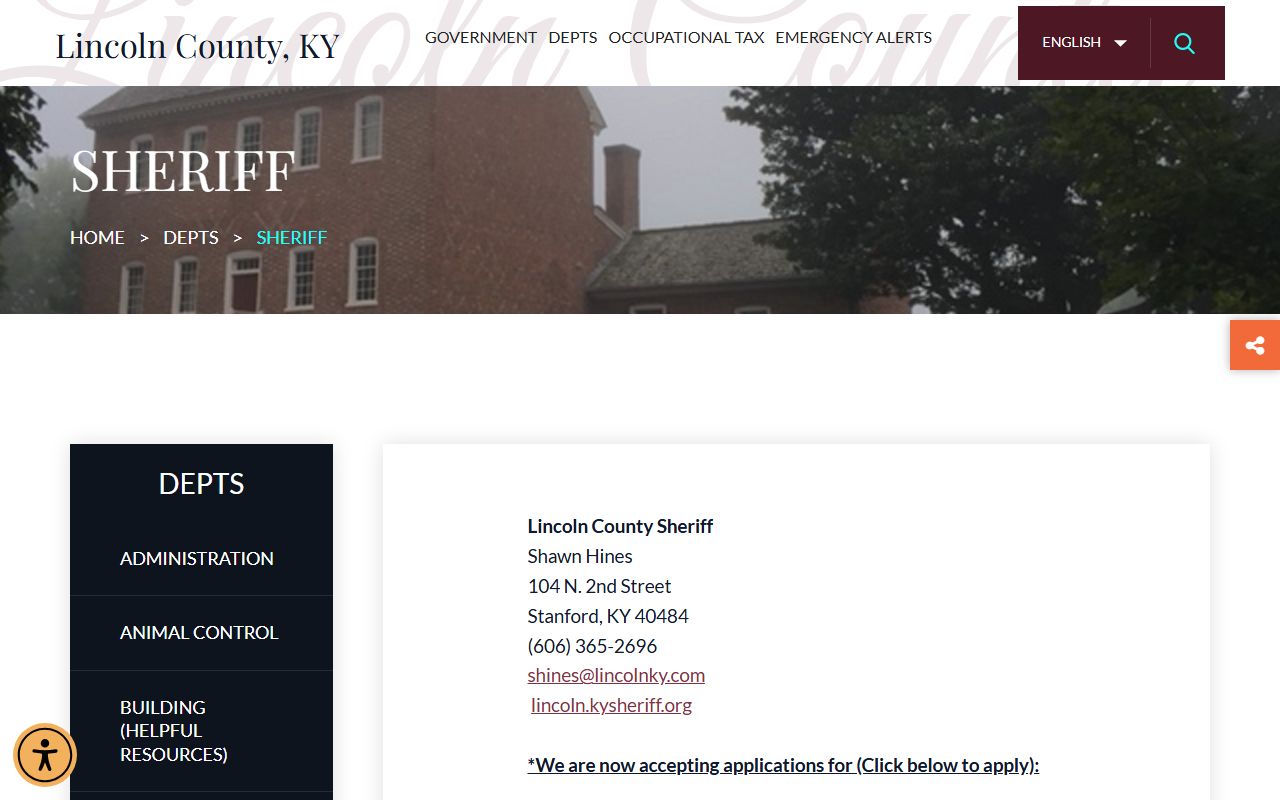
Sheriff information helps with the arrest side, while filed charges and court dispositions still need the court record path.
Lincoln Charges vs Convictions
A charge is an accusation. A conviction is a court result. That distinction is critical when reading Lincoln County arrest records, court charges after arrest, and criminal court records. A charge may be pending, dismissed, reduced, or amended. A conviction follows a guilty plea, verdict, or other finding of guilt entered in court.
| Point of comparison | Charge | Conviction |
|---|---|---|
| Record stage | Filed after arrest, citation, complaint, information, or indictment | Entered after plea, verdict, or court finding |
| Meaning | Accusation that must still be proved or resolved | Formal outcome showing guilt on that count |
| Where to verify | KYeCourts, docket, clerk, or prosecutor records | Final judgment, sentencing order, or certified court copy |
| Public limits | May be hidden if juvenile, sealed, expunged, or otherwise restricted | May also be sealed or expunged if the law and court order allow |
For a complete criminal case file, including sentence and final disposition, use the Lincoln County criminal court records page or contact the Circuit Court Clerk. For legal advice about the meaning of a charge, use counsel. Court staff can provide records and case status, but they cannot tell a defendant how to plead or whether to waive rights.
Lincoln County Prosecutor Review
Kentucky does not use the District Attorney title. The Lincoln County Attorney prosecutes many misdemeanors, traffic matters, juvenile matters, and county legal duties. The Commonwealth's Attorney handles felony prosecutions for the 28th Judicial Circuit, which includes Lincoln, Pulaski, and Rockcastle Counties. The Kentucky Attorney General's attorney list identifies Hon. David Dalton as the Commonwealth's Attorney for that circuit.
Prosecutor review explains why a booking charge and a court charge can differ. An officer may arrest or cite based on facts known at the scene. The prosecutor then reviews reports, witness information, criminal-history concerns, statute elements, and available proof. Charges may be filed as listed, changed, declined, or later amended. Felony charges may also depend on grand jury action before they appear as Circuit Court indictments.
Lincoln County Attorney
111 E. Main St.
Stanford, KY 40484
606-365-9161
28th Circuit Commonwealth's Attorney
126 South Main, Suite 110
Somerset, KY 42539
606-677-4100
Public Lincoln Charge Access
Kentucky public access starts with the office that holds the record. Court case records in Lincoln County start with the Circuit Court Clerk, while sheriff records start with the sheriff. The Lincoln County County Clerk open-records page is useful for land records, delinquent taxes, and records held by that office, but it states that requests must go to the government entity that oversees the requested record. That means County Clerk open records are not the path for court charges, jail records, or sheriff records.
Kentucky's Open Records Act defines public records in KRS 61.870, and the official Chapter 61 index includes inspection and copy provisions such as KRS 61.872 and KRS 61.874. Court records also follow court-specific access, retention, sealing, juvenile, and expungement rules. A charge may be public in one context but unavailable through a simple online search because of age, record location, captcha gates, sealed status, or redaction.
The Lincoln County Sheriff Court Services page describes courthouse security at the Judicial Center, including courtroom and main entrance staffing.
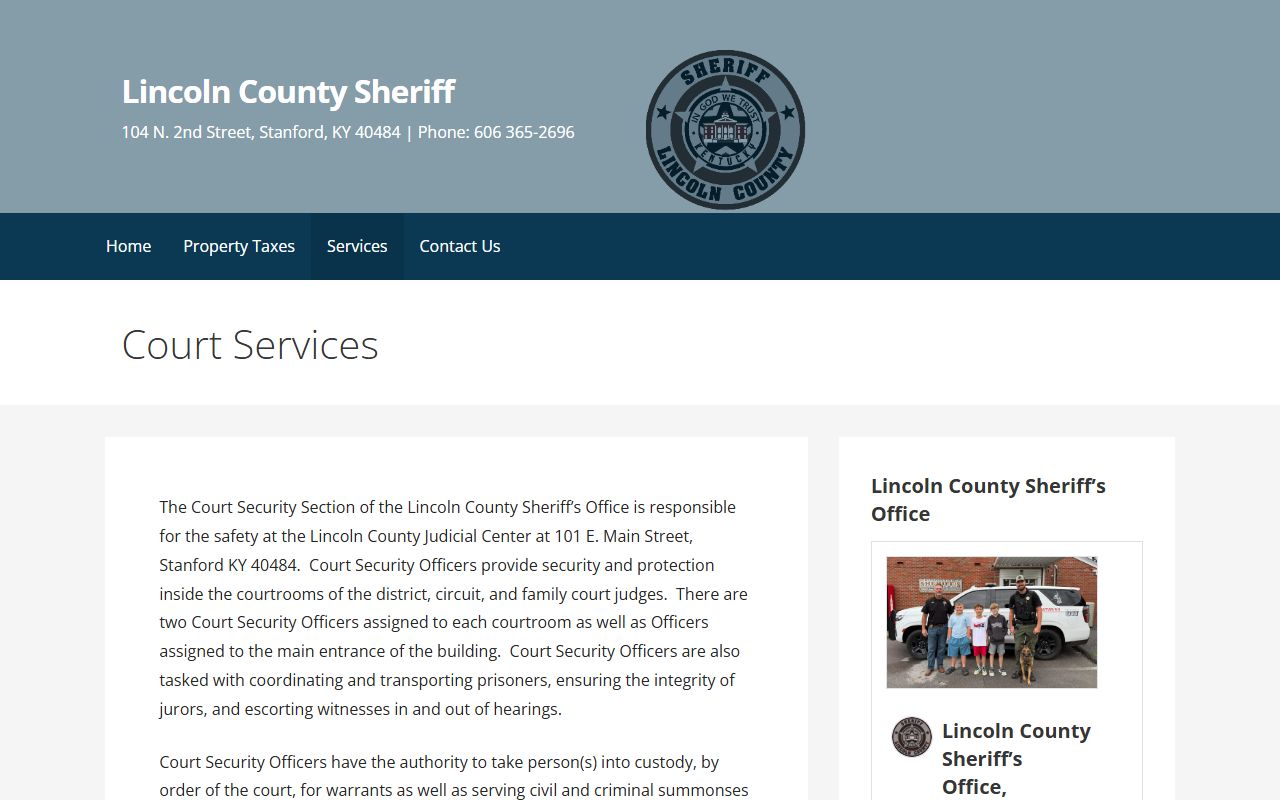
Security details are practical for people who must appear in person after an arrest, charge, warrant, or missed court date.
Lincoln Sealed Charge Records
Sealed and expunged records should not be treated as ordinary public Lincoln County arrest records. Juvenile cases are restricted under Kentucky juvenile statutes, including KRS 610.320 and KRS 610.340. Adoption, mental-health commitment, protected-address, and some domestic-violence details may also be limited. Expungement can remove qualifying records from ordinary public view after the required certification and court process.
| Record limit | What it means | Research source |
|---|---|---|
| Sealed | The file is hidden from general public access unless a law or court order allows review. | Court-specific access and sealing rules |
| Expunged | A qualifying charge or conviction is removed from ordinary public access after court action. | KRS 431.073, KRS 431.076, KRS 431.078 |
| Juvenile | Access is limited to parties, attorneys, agencies, or court-approved access in many cases. | KRS 610.320 and KRS 610.340 |
The Lincoln County Sheriff process papers page also shows the sheriff role in civil process, which is separate from criminal charge filing.
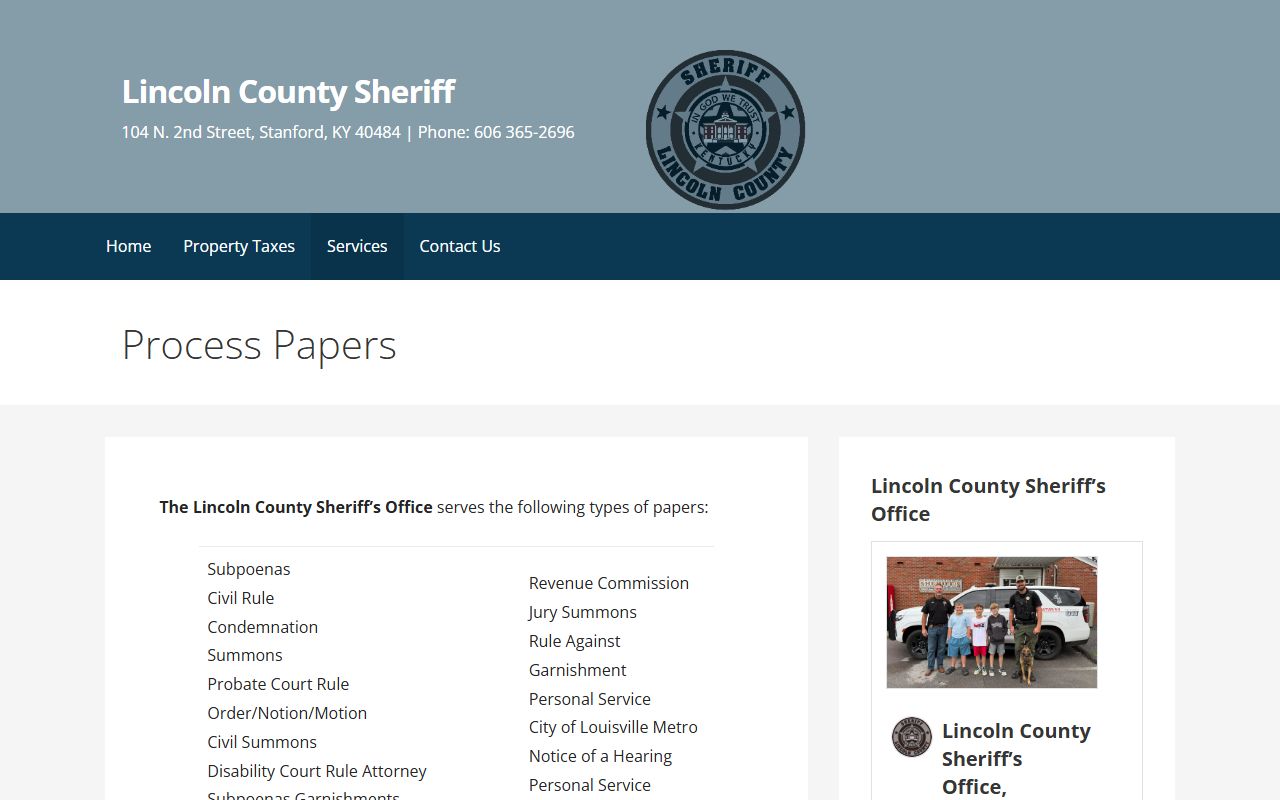
That distinction helps avoid mixing arrest records, civil paper service, and court charge records into one search path.
Note: Dismissed charges may still need formal expungement before they disappear from ordinary public court searches.